Proof Ancient Egypt was a Nordic Empire ;)

The ancient Egyptians were white.  Some even claim that they were Nordic.  The mummy of the Pharaoh Ramses II is indisputable proof.

caucasian 1

Afro-centrists aren’t getting around this one.  Only “white” people have these facial features:

caucasian 2

And the winners of “The Ramses II Look-Alike Contest” are…

[drumroll]

ramses lookalile

…all blonde, white, Nordic, Germanic, Teutonic Danish Vikings!

Funny, I don't FEEL Nordic...
Funny, I don’t FEEL Nordic…

See Ramses come face-to-face (literally) with modern northeast African men for a comparison (skip to 4:30):

Egypt (Ta-Merry, Ta-Nehisi, Meroe, Kemet) had Black natives, but it was a crossroads of cultures.  So let’s just play devil’s advocate, and argue that  Ramses was “white”:

American President Barack Obama is “black” (actually half “white”, so technically grey).  If people exhume his remains, and those of his wife and children 2,000 years from now, sequence their genomes and measure their skulls, should they conclude that all Americans throughout its history were “black”? 

Sounds stupid, doesn’t it?

Not every ruler, or person living in Egypt, was originally from Egypt (that’s certainly the case today).  Some dynasties were west Asian, like the Greek Ptolemaic Dynasty.  Persians ruled Egypt from time to time, as did Turkic Muslims and Romans.  And nobody knows where the Hyksos came from, but they were “white”.  The native Egyptians were “black” Africans, but there were “white” people in Egypt (similar to America or Brazil with their natives marginalized to the point of invisibility by a cosmopolitan mix of invaders.)i

Here’s the real, real truth:  You know very little about race, and what you (think you) know doesn’t benefit you:

Common Racial Notions

  1. “Black” people have broad noses, woolly hair and full lips.

caucasian 3

2. “White” people have long, lank hair blond, and blue, green and hazel eyes.

caucasian 4

3.  (East) Asians have “slanted”* eyes.

*epicanthic fold

caucasian 5

By that “logic”, this is a White Black Man…

middle

…and this is a Black White Man…

black- straight hair, thin features


And these are…  ??

pale, straight blond hair

Back to the Original Topic

They were Northeast Africans, meaning they typically exhibited dark skin, gracile musculature, wavy to kinky hair, and often had “negroid” facial features:

akhenaten
Akhenaten, Father of Tutankhamen

Amāna- ātpa (Amenhotep III, Amenophis III;
Amāna- ātpa (Amenhotep III, Amenophis III; “Amun is Satisfied”)
Never make the mistake of thinking Egypt was the Origin of knowledge and understanding... It was the last of the African dynasties.
Never make the mistake of thinking Egypt was the Origin of knowledge and understanding… It was the last of the African dynasties.

Slave is A Class, Not A Color

“Every king springs from a race of slaves, and every slave had kings among his ancestors.” (Plato)

In 1863 and 1864, eight former slaves toured the northern states to raise money for impoverished African-American schools in New Orleans; four white children were deliberately included to evoke sympathy from white northerners. Photographs of Charles Taylor, Rebecca Huger, Rosina Downs, and Augusta Broujey were mass-produced and sold as part of the campaign.
3.

Via loc.gov
4.

Via loc.gov
5.

Via loc.gov
6.

Via loc.gov
7.

Via loc.gov
8.

Via loc.gov
9.

Via loc.gov
10.

Via loc.gov
11.

Via loc.gov
12.

Via loc.gov
13.

Via loc.gov
14.

Via loc.gov
15.

Via loc.gov
16.

17.

Via loc.gov
18.

For further reading on these children, see White Slaves by Celia Caust-Ellenbogen and Visualizing the Color Line by Carol Goodman.

Childlessness Puts Women at a Greater Risk of Cancer: Study

Breast, ovarian and uterine cancers  result from childlessness, say scientists.

Not having children is a risk factor for cancer because pregnancy, as well as breastfeeding a baby, reduces the number of ovulatory cycles a woman has in her lifetime. More ovulatory cycles increases cancer risk. Women who begin their periods at an early age and hit the menopause late also have a higher risk.

In the first half of the 20th century, scientists who studied nearly 32,000 Catholic nuns in the US established that their death rates from breast, ovarian and uterine cancer were higher than for other women of their age. In 1970, it was formally recognised that the lack of childbearing in nuns raised their breast cancer risk.

http://www.theguardian.com/society/2011/dec/07/catholic-church-allow-nuns-contraceptive

Emancipation, Sharecropping, Reparations IN RUSSIA…

Serf.  Middle French serf from Latin servus (“slave”).  1. a person in a condition of servitude, required to render services to a lord, commonly attached to the lord’s land and transferred with it from one owner to another.  2. a European* enslaved to another European

*”Europe” is western Asia

Donald R. Shaffer's avatarCivil War Emancipation

On March 3, 1861, an event of seismic significance occurred in the history of international emancipation. With the stroke of a pen, Tsar Alexander II freed 23 million Russian serfs. It always has been a point of pride for Russians that their great emancipation preceded the one in the United States and occurred largely without bloodshed. Adam Goodheart has written a nice piece on this event in yesterday’s Disunion in the New York Times. I heartily recommend it, although I wish Goodheart had said more about the limitations of Russia’s 1861 Emancipation Manifesto.

First, the decree only freed serfs on private land. Imperial serfs, on land controlled directly by the Tsar, were not freed until 1866. Second, Russians landlords were compensated handsomely by the Tsar’s government for the loss of their land, which was given to peasant mir communities who in turn were required to make regular payments to the government for it plus…

View original post 182 more words

8 Maps That Will Change the Way You See the World

You already know that Africa isn’t a country. But what else? Check out these maps and put the continent’s population, income, growth, and potential into context.

1. Where the world’s 7 billion live

National Geographic‘s map illustrates where and how the world lives. Not surprisingly, the areas with the highest income levels have greater life expectancy (77 for males, 83 for females compared to 58 and 60 in low income levels), access to improved sanitation (99 percent compared to 35 percent), among other human security factors. The need for development is critical in sub-Saharan Africa, where nearly 1 billion people live, many on $995 or less a year.

2. How the world would look if it were measured by its wealth, 2015

Using data from the World Bank Development Indicators, Global Finance‘s map shows us what the world will look like in 2015 – that is if it were inflated to the size of their economic wealth. Once again, the need to spur growth in Africa is not just evident, but necessary.

3. Now, the real size of Africa

If you’re like most, you know the African continent is pretty big. But how big? The infographic above, created by Kai Krause uses some of the largest countries in the world and even all of Eastern Europe as puzzle pieces within the grand continent of Africa.

4. Where the world’s 30 million slaves live

To quote Rajiv Narayan from Upworthy, “Sure 12 Years a Slave won an Oscar, but we all deserve to win Best Actor for pretending slavery doesn’t exist anymore.” The map above, issued by the Walk Free Foundation stains the world map with reds representing concentrated slavery presence and lighter yellows for lower concentrations. The index considers estimated prevalence of modern slavery by population, child marriage, and human trafficking in and out of a country.

5. Global Vegetation

This view of the world’s vegetation presented by NASA clearly depicts the pastoral difference between North and South Africa. There is evidently opportunity for agriculture – in fact —it is twice as effective in reducing poverty as growth in other sectors. But there are other risks to consider in non-pastoral land. Check it out the following map…

6. World Water Risk 

When we say we have a global water crisis, we mean it. The World Resource Institute dedicated a mapping tool called Aqueduct to help companies, investors, governments, and the public understand the global water stress and risks. Notice the similarities with the previous map now? You should. While there is opportunity for agriculture in sub-Saharan Africa, North Africa and parts of South Africa face high risk of water scarcity.

7. Global Internet Usage

On a continent where only 7 percent of its inhabitants are online, this map is an eye-opening illustration of the digital divide. With the internet comes improved access to information, communication and ideas – and organizations need to make sure to bridge the gap. The good news is that Africa’s telecommunications market is one of the fastest in the world.

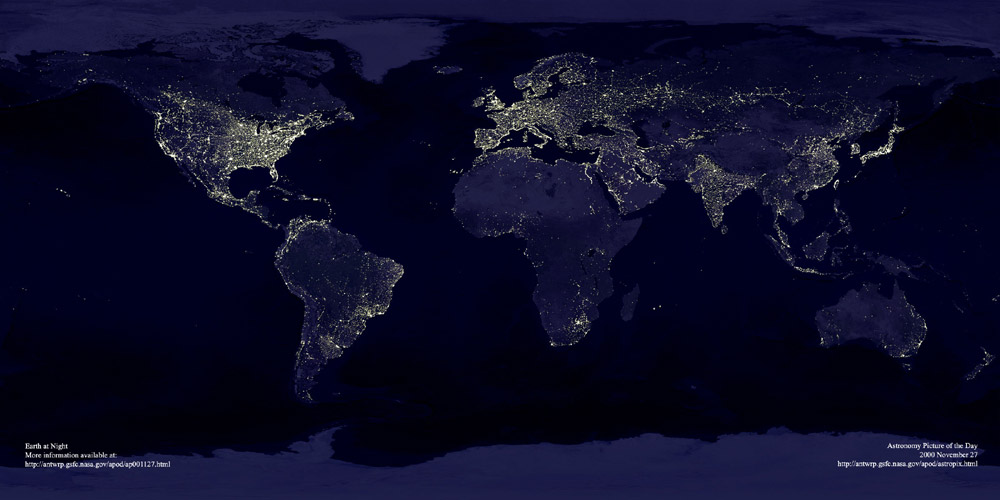
8. Energy Poverty

Last but not least, this snapshot of the world at night, stitched together with photos from NASA, contrasts with the little access to electricity in Africa compared to the global north. Energy poverty translates to poor health care, stifled economic growth, toxic fumes, limited or no education, and lack of safety. Fortunately, you can help make a difference and bring electricity to 50 million people for the first time by asking your representatives to support the Electrify Africa Act. http://www.one.org/us/2014/03/13/8-maps-that-will-change-the-way-you-look-at-africa/

Circumcision Helps Cut HPV Transmission Rate, Study Finds

Among HIV-negative sexual partners, male circumcision helps prevent the transmission of human papillomavirus from men to women, according to a new study.

However, circumcision offers only partial protection and partners must still practice safe sex, the researchers pointed out.

Human papillomavirus (HPV) is a sexually transmitted infection that puts women at risk for cervical cancer. Previous research has shown that circumcision reduces the risk of HPV infection in men.

In this new study, researchers analyzed data from two clinical trials in Uganda that followed HIV-negative men and their HIV-negative female partners between 2003 and 2006. The incidence of new high-risk HPV infection was 23 percent lower for women with circumcised partners than for those with uncircumcised partners, the investigators found.

“Along with previous trial results in men, these findings indicate that male circumcision should now be accepted as an efficacious intervention for reducing heterosexually acquired high-risk and low-risk HPV infections in men who do not have HIV and in their female partners. However, our results indicate that protection is only partial; the promotion of safe sex practices is also important,” concluded Drs. Aaron Tobian and Maria Wawer, of Johns Hopkins University in Baltimore.

The study was published online Jan. 6 in The Lancet.

In an accompanying commentary, Dr. Anna R. Giuliano of the H. Lee Moffitt Cancer Center in Tampa, Fla., and colleagues wrote: “Recent findings add important evidence for the promotion of male circumcision in countries without well-established programs for cervical screening. Additional interventions to reduce HPV infection, such as provision of vaccines for HPV prevention, will be essential to reduce invasive cervical cancer worldwide. Male circumcision is associated with slight reductions in high-risk HPV, while licensed HPV vaccines protect with high effectiveness against only a limited number of HPV types. Therefore, the two interventions are likely to have important synergistic effects.”

More information

The U.S. Centers for Disease Control and Prevention has more about HPV prevention.

— Robert Preidt

SOURCE: The Lancet, news release, Jan. 6, 2011

Last Updated: Jan. 07, 2011

Copyright © 2011 HealthDay. All rights reserved.

Circumcision Helps Cut HPV Transmission Rate, Study Finds

This Is Your Brain on Junk Food

There are a range of factors that scientists and food manufacturers use to make food more addictive.

Dynamic contrast. Dynamic contrast refers to a combination of different sensations in the same food. In the words of Witherly, foods with dynamic contrast have:

… an edible shell that goes crunch followed by something soft or creamy and full of taste-active compounds. This rule applies to a variety of our favorite food structures — thecaramelized top of a cremebrulee, a slice of pizza, oran Oreo cookie — the brain finds crunching through something like this very novel and thrilling.

Salivary response. Salivation is part of the experience of eating food, and the more that a food causes you to salivate, the more it will swim throughout your mouth and cover your taste buds. For example, emulsified foods like butter, chocolate, salad dressing, ice cream, and mayonnaise promote a salivary response that helps to lather your taste buds with goodness. This is one reason why many people enjoy foods that have sauces or glazes on them. The result is that foods that promote salivation do a happy little tap dance on your brain and taste better than ones that don’t.

Rapid food meltdown and vanishing caloric density. Foods that rapidly vanish or “melt in your mouth” signal to your brain that you’re not eating as much as you actually are. In other words, these foods literally tell your brain that you’re not full, even though you’re eating a lot of calories.

The result: You tend to overeat.

In his best-selling book Salt Sugar Fat, author Michael Moss describes a conversation with Witherly that explains vanishing caloric density perfectly…

I brought him two shopping bags filled with a variety of chips to taste. He zeroed right in on the Cheetos. “This,”Witherly said, “is one of the most marvelously constructed foods on the planet, in terms of pure pleasure.” He ticked off a dozen attributes of the Cheetos that make the brain say more. But the one he focused on most was the puff’s uncanny ability to melt in the mouth. “It’s called vanishing caloric density,”Witherly said. “If something melts down quickly, your brain thinks that there’s no calories in it … you can just keep eating it forever.”

Sensory specific response. Your brain likes variety. When it comes to food, if you experience the same taste over and over again, then you start to get less pleasure from it. In other words, the sensitivity of that specific sensor will decrease over time. This can happen in just minutes.

Junk foods, however, are designed to avoid this sensory specific response. They provide enough taste to be interesting (your brain doesn’t get tired of eating them), but it’s not so stimulating that your sensory response is dulled. This is why you can swallow an entire bag of potato chips and still be ready to eat another. To your brain, the crunch and sensation of eating Doritos is novel and interesting every time.

Calorie density. Junk foods are designed to convince your brain that it is getting nutrition, but to not fill you up. Receptors in your mouth and stomach tell your brain about the mixture of proteins, fats, carbohydrates in a particular food, and how filling that food is for your body. Junk food provides just enough calories that your brain says, “Yes, this will give you some energy,” but not so many calories that you think, “That’s enough, I’m full.” The result is that you crave the food to begin with, but it takes quite some time to feel full from it.

Memories of past eating experiences. This is where the psychobiology of junk food really works against you. When you eat something tasty (say, a bag of potato chips), your brain registers that feeling. The next time you see that food, smell that food, or even read about that food, your brain starts to trigger the memories and responses that came when you ate it. These memories can actually cause physical responses like salivation and create the “mouth-watering” craving that you get when thinking about your favorite foods.

All of this brings us to the most important question of all.

Food companies are spending millions of dollars to design foods with addictive sensations. What can you and I do about it? Is there any way to counteract the money, the science, and the advertising behind the junk food industry?

How to Kick the Junk Food Habit and Eat Healthy

The good news is that the research shows that the less junk food you eat, the less you crave it. My own experiences have mirrored this. As I’ve slowly begun to eat healthier, I’ve noticed myself wanting pizza and candy and ice cream less and less. Some people refer to this transition period as “gene reprogramming.”

Whatever you want to call it, the lesson is the same: If you can find ways to gradually eat healthier, you’ll start to experience the cravings of junk food less and less. I’ve never claimed to have all the answers (or any, really), but here are three strategies that might help.

1. Use the “outer ring” strategy and the “5 ingredient rule” to buy healthier food.

The best course of action is to avoid buying processed and packaged foods. If you don’t own it, you can’t eat it. Furthermore, if you don’t think about it, you can’t be lured by it.

We’ve talked about the power of junk food to pull you in and how memories of tasty food in the past can cause you to crave more of it in the future. Obviously, you can’t prevent yourself from ever thinking about junk food, but there are ways to reduce your cravings.

First, you can use my “outer ring” strategy to avoid processed and packaged foods at the grocery store. If you limit yourself to purchasing foods that are on the outer ring of the store, then you will generally buy whole foods (fruits, vegetables, meat, eggs, etc.). Not everything on the outer ring is healthy, but you will avoid a lot of unhealthy foods.

You can also follow the “5 ingredient rule” when buying foods at the store. If something has more than 5 ingredients in it, don’t buy it. Odds are, it has been designed to fool you into eating more of it. Avoid those products and stick with the more natural options.

2. Eat a variety of foods.

As we covered earlier, the brain craves novelty.

While you may not be able to replicate the crunchy/creamy contrast of an Oreo, you can vary your diet enough to keep things interesting. For example, you could dip a carrot (crunchy) in some hummus (creamy) and get a novel sensation. Similarly, finding ways to add new spices and flavors to your dishes can make eating healthy foods a more desirable experience.

Moral of the story: Eating healthy doesn’t have to be bland. Mix up your foods to get different sensations and you may find it easier than eating the same foods over and over again. (At some point, however, you may have to fall in love with boredom.)

3. Find a better way to deal with your stress.

There’s a reason why many people eat as a way to cope with stress. Stress causes certain regions of the brain to release chemicals (specifically, opiates and neuropeptide Y). These chemicals can trigger mechanisms that are similar to the cravings you get from fat and sugar. In other words, when you get stressed, your brain feels the addictive call of fat and sugar and you’re pulled back to junk food.

We all have stressful situations that arise in our lives. Learning to deal with stress in a different way can help you overcome the addictive pull of junk food. This could includesimple breathing techniques or a short guided meditation. Or something more physical like exercise or making art.

With that said, if you’re looking for a better written and more detailed analysis of the science of junk food, I recommend reading the #1 New York Times best-seller Salt Sugar Fat.

James Clear writes at JamesClear.com, where he shares ideas about using behavior science to improve your performance and master your habits. For useful ideas on how to live a healthy life, both mentally and physically, join his free newsletter.

Follow James Clear on Twitter: www.twitter.com/james_clear

From http://www.huffingtonpost.com/james-clear/why-we-crave-junk-food_b_4261415.html?ir=Taste&ref=topbar

A Quarter Of Europe’s Bumblebees, Vital To Agriculture, Face Extinction

Of the five most important insect pollinators of European crops, three are bumblebee species.

What are Bumblebees and Why Are They Important?

Often with yellow and black stripes and bigger than honeybees, bumblebees live in small nests of up to 200 and do not make honeycombs. Some bumblebees are commercially bred to pollinate tomatoes, peppers and aubergines in greenhouses.  Only queen bumblebees survive the winter.

Of the five most important insect pollinators of European crops, three are bumblebee species,” said the IUCN, which groups governments, scientists and conservation groups.

Honeybees, living in longer-lasting colonies of thousands of bees, make honeycombs largely to ensure that the insects have food to survive months with no nectar-making flowers.

What’s Happening to Them?

Almost a quarter of Europe’s bumblebees are at risk of extinction due to loss of habitats and climate change, threatening pollination of crops worth billions of dollars, a study showed on Wednesday.

Sixteen of 68 bumblebee species in Europe are at risk, the Red List of the International Union for Conservation of Nature (IUCN) said. It is preparing a global study of the bees, whose honeybee cousins are in steep decline because of disease.

Populations of the critically endangered Bombus cullumanus, now found only in France, have fallen by more than 80 percent in the past decade, apparently because of a reduction in the amount of meadows with clover, its favourite forage, the study added.

“Climate change, the intensification of agriculture and changes in agricultural land are the main threats” to bumblebees, said the report, the first Red List assessment of threats to bumblebees.

Read More at http://www.huffingtonpost.com/2014/04/02/europe-bumblebees_n_5075547.html?ir=Taste&ref=topbar

Why You Should Never Eat High Fructose Corn Syrup

In recent history, we’ve gone from 20 teaspoons of sugar per person per year to about 150 pounds of sugar per person per year. That’s a half pound a day for every man, woman, and child in America.

The average 20-ounce soda contains 15 teaspoons of sugar, all of it high fructose corn syrup. And when you eat sugar in those doses, it becomes a toxin.

As part of the chemical process used to make high fructose corn syrup, the glucose and fructose — which are naturally bound together — become separated. This allows the fructose to mainline directly into your liver, which turns on a factory of fat production in your liver called lipogenesis.

This leads to fatty liver, the most common disease in America today, affecting 90 million Americans. This, in turn, leads to diabesity — pre-diabetes and Type 2 diabetes. So, high fructose corn syrup is the real driver of the current epidemic of heart attacks, strokes, cancer, dementia, and of course, Type 2 diabetes.

HFCS contains dangerous chemicals and contaminants

Chemical contaminants used during manufacturing end up in the HFCS and in our food.  What we know, for example, is that chloralkali is used in making high fructose corn syrup. Chloralkai contains mercury. And there are trace amounts of mercury found in high fructose corn syrup-containing beverages.  Over time, these heavy metals can accumulate in the body, causing health problems.

Additionally, when we look at the chemical components of high fructose corn syrup on a spectrograph, we can see that it contains many weird chemicals that we know nothing about.

Look out for the red flag

The main reason you should give up high fructose corn syrup is that it’s a big red flag for very poor quality food. If you see this ingredient on a label, I guarantee you the food is processed junk. So, if high fructose corn syrup is anywhere on the label, put it back on the shelf. You should never eat this food.

If you want to stay healthy, lose weight easily, get rid of chronic disease, and help reduce the obesity epidemic, the single most important thing you can do is eliminate high fructose corn syrup from your diet and from your children’s diet.

Purge your kitchen

I challenge you to go into your kitchen right now, go in the cupboard and refrigerator, and look at every single label. And I want you to count how many products you have right now in your house that contain high fructose corn syrup. Then, I want you to get a big garbage bag and throw them out and find replacements that are free of it.

If you want to have some sugar, that’s fine. Have a little sugar, but add it to your food yourself. Don’t eat food made with added sugar. Cut the high fructose corn syrup from your life forever. You’ll be healthier. Our planet will be healthier. And we’ll have a healthier generation of children.

Mark Hyman, MD is a practicing physician, founder of The UltraWellness Center, a six-time New York Times bestselling author, and an international leader in the field of Functional Medicine. You can follow him on Twitter, connect with him on LinkedIn, watch his videos on YouTube, become a fan on Facebook, and subscribe to hisnewsletter.

For more by Mark Hyman, MD, click here.

For more on personal health, click here.

Follow Mark Hyman, MD on Twitter: www.twitter.com/markhymanmd

from http://www.huffingtonpost.com/dr-mark-hyman/high-fructose-corn-syrup_b_4256220.html?ir=Taste&ref=topbar