Africa Is Bigger than Kemet, by Maurice Milles Mansa
KEMET HEADS, AFRICA IS BIGGER THAN KEMET : I ask all Kemit heads about NOK which is in West Africa and is six thousand years older than kemit, they always draw a blank, lol, Africa is bigger than Kemit, our knowledge extends far beyond kemit. Kemit is the result of our great and ancient knowledge, not the source of our knowledge. NOK is just the tip of the iceberg which is Africa. The civilization built in South Africa at the location now called Adam’s Calendar is 75k – 200k years old, that is one hundred times older than Kemit, wake up, Kemit is just one of many, Africa is far greater than Kemit.

Nok is not as common knowledge as Kemet, but they are totally interconnected, We need to each seek this type of information out, teach it to each other, and deliver it to the masses so that we can expose what has been hidden. If people would stop trying to separate Kemet from Africa then they would have a better understanding!! KMT is a part of the land its just north but it is in Africa.
The Inshongo Bone is over 100, 000 Yrs old in the Congo, first signs of Calculation of any Nation. Adam’s calender in the Mpumalanga Province. That province has some of the most amazing things. Wake up from your long sleep and see you have a entire continent filled with ancient civilizations, all you have to do is use your eyes.
I don’t think anyone would with good knowledge doesn’t know there were other civilizations before Kemet. That’s a given. For me Kemet represents a alternative for restoring and obtaining God hood. The culture in Kemet left a step by step means of obtaining your God hood. The Per tu Tem Heru. Coming forth by Day. Or the Egyptian book of the dead…. Personally, I’m for any “indigenous African culture” that uplifts black/ African people and not divide them.
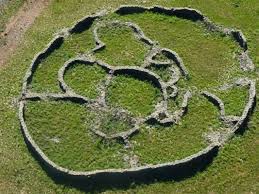
Kemit and that is only 10,000 years of our history, we were in South Africa building astronomically aligned stone circles 200,000 years ago, Kemit was not even a thought way back then.
There is always more to learn! Accept that the beginning may not be the beginning but just a portion of what could be found! So loving my history! Why have just a country when you can have the whole continent or better expand yourself and see that the whole world is yours!
Many will go blind from starring at kemet not knowing where the knowledge which built Kemet came from, some even think the knowledge came from Kemet, they need to remove those shades and see the sunlight.
Its not so simple as to study one portion of the land, to have true knowledge is to be open to every piece of the land. There are many belief systems in place in Africa and so much to learn.Don’t stop in one area keep searching and reading my people you should know we existed far longer than the very small time period of Kemet.
WE have built a great deal more than just Kemit loose the tunnel vision, take the blinders off, people are fake doing Kemit, first and foremost there was no ancient civilizations built in that region because we could not get there during the last five ice ages, that is five periods of forty thousand years each, the dessert was five times larger and much more arid during to past 120k years so no one was going to the delta region, this is the reason we lived so long in the lower parts of the continent and crossed into Yemen from Somaliland before we crossed the Sinai.
Many of us forget that Kemetic is a conglomeration of many Afrikan nations as well as the Masonic capital. And as documented by them they know they come from the South. The Nile Valley is just an extension of what the Twa set up. We claim all of Africa and the whole globe. Everything the Egyptians practiced came from the south, their Dieties, math, science, architecture pottery it all came from the south. The cosmology also came from the south.
All of Africa is interconnected…. Always has been…. Always will be… No matter how much they try to divide and disconnect us. Ptah is a pgymies God brought to by West Africans, Kemit did not invent the knowledge, kemit inherited the knowledge, the entire lodge system of Kemit is from earlier Western and Southern African civilizations.
The stone circles in southern Africa are called ADAM”S CALENDAR, it was given that name because it is the oldest astronomical chart on earth to date, some call it Enki’s calendar, however the legend of Enki is not from that area, Enki is a Sumerian God, Sumer is in Arabia NOT South Africa.
Kemet is one of the daugthers of Africa and not the source. So many have there heads stuck on East and North Africa but know nothing of the fact that it all came from Southern Africa and West Africa, the bloodline of the Pharaohs is from the Lakes region and West Africa, the Pharaohs are NOT from North Africa.
I really try to approach matters in a peaceful manner. I am very passionate when it comes to learning about our origin. My journey started with Ray Hagins as well as a few other scholars. If you have never heard of NOK or the many other civilizations do not allow that make you unwilling to find out about them.
South African is the last bastion of human origin it is appears that a cycle is occurring where there is renewed interest in S. A. A while back (1980) four Native America Shamans traveled to South Africa to interact with S.A. Shamans to discuss the belief that the restart of things anew will once again begin in South Africa.
One of our esteemed brothers Tshila Ndhlela from Zimbabwe, in Southern African. Point out on another post that South Africa in Ancient times as a country did not exist. According to recent research relative to KMT compared to South Africa. In an article: Scholars have told us that the first civilisation on Earth emerged in a land called Sumer some 6000 years ago.

The persistent research by South Africans Michael Tellinger, Johan Heine and a team of leading scientists, over an extend seven-year period, has resulted in astonishing new archaeological and scientific discoveries. It shows that the Sumerians and even the Egyptians inherited all their knowledge from an earlier advanced civilization that lived at the southern tip of Africa more than 200,000 years ago… mining gold.
Brother Thulani Max Mtolo supported Tshila baba’s point that Contextually when ancient S. Africa is referenced most are speaking directionally/specifically. Thulani Max Mtolo consistently points out that southern Africa was was called KwaNgwane before the crakkka invaded , it was part of the Swati Kingdom ..so there you go , it’s more of Swaziland than SA ..even Swaziland is a name given by the crakkka .. The name of the land is KwaNgwane the Swati Kingdom ….point being , let us not dwell on the South Africa as a country (ancient or whatever ) but as a point of geographical reference.
Thulani Max Mtolo is one of the few people with the common sense to read and understand. Kemit Heads will continually focus on kemit, Babylon, Sumeria and other highly commercialized cultures because that is all they hear from the crakkka, they will never look deeper into African history, instead choosing to focus on Easter Island, Aztecs, Olmecs, and all the commercialized European approved subjects, The Swati Kingdom is the furthest thing from their mind, then because they do not know much about the hundreds of African civilizations they try to fill in the blanks with “imagination”, it is a sick mind that ignores a continent to favor a small group of territorial states.
Tshila Ndhlelahas impressed me with his understanding of the truth of our continuing history. The Karanga/Kalanga Empire is something Kemit Heads never discuss, some even revolt when i bring up these ancient empires that predate kemit and are in fact the source of the knowledge displayed in kemit. The migrations of Anu/Bantu/Antu/Vanhu is yet another story many will just not understand because they have absorbed too much Egyptology because of the commercialized promotion of Kemit.
Knower Seeker also drops bombs on this subject, I agree that Kemit is impressive, but Kemit is the child, not the parent, therefore it is not to be exalted above the real origin of our civilizations and knowledge. Dr. Ben and all of his neophytes make it very clear that the Brothers and Sisters of Kemet stated that they came from the people of upper Afrika and that they owe all of their information to them. And when the people refer to “upper Kemet they are referring to Southern Africa, they refer to the mountains of Ethiopia/Cush “upper”.
Kemet’s demise was caused by it’s own rulers’ foolishness, the Grand Lodges in kemit were opened to the Greeks, Persians, and all types of foreigners, this type of foolishness is what drove the Eurasians to desire to capture and rule Kemit for themselves. The other empires and temple states never allowed the Caucazoids into the temples which is why the caucazoids know little to nothing about other areas of Africa to this very day.
I must state that all of the information of our ancestor is too vast for any one of us to overstand and that we must be very careful when discussing it with our people that do not want to know.
SOME WILL NEVER SEE THE FORREST FOR ALL THE TREES ARE BLOCKING THEIR VISION
There are many ancient Black civilizations in the world. This should be a common understanding once one understands that African people are the original people of planet Earth. Once this is understood, then one can have a more of an appreciation for the cultures of African people all over the world. Kemet, Nubia, Ethiopia or East Africa is studied more because of the massive monuments left behind.
I am just like you, I Maurice Mansa at one point in my life did not have the knowledge I now hold dear to heart about African people. I had to start from somewhere! But I never closed my eyes to all of Africa in favor of any section of Africa, I do not hold any tribe or African civilization above any other African tribe or civilization, surley we are all kin, we are united by our diversity.
Sometimes, we look back on our journey into becoming filled with Black consciousness, and we see other Black people who are in the same place we once were, and this should make us want to support these Black people them. I look back on my journey, and realize I have grown. I encourage you all to keep increasing your knowledge, wisdom, and understanding about Africa’s thousands of ancient civilizations.
KEMIT HEADS will continue exalt Kemit above other African cultures primarily because that is what white folk have done. It is the Europeans who are so exclusively interested in Kemit that are causing such a irrational response by American Blacks. Africans on the continent are not as interested in Kemit because they have not been bombarded by endless European commercialized Egyptian propaganda, most of which is completely fraudulent.
If anyone would simply look, you would quickly notice that all of the monuments in Nubia are OLDER than what is in Kemet, you would also learn that the modern state called Nubia is less than one sixth of the Ancient Nubia, the Ancient Nubia stretched from the East coast all the way to Timbuktu in the West and included the input and knowledge of hundreds of tribal cultures, it is from this perspective that you must comprehend the vast amount of knowledge not being discussed by KEMET HEADS because you can not see the vastness of Africa if you are looking at our vast past with tunnel vision.

I taunt brothers every now and then by calling them” Kemit Heads”, but it’s all out of love that I challenge them to think of Africa as a whole, it is not that I do not appreciate the great achievement which is Kemet, it is simply the fact that Kemet is not the source of our knowledge, Kemet is the grandchild not the parent, Kemet is the result of our knowledge from all of the continent.
HOTEP BROTHERS, SEEK TRUTH IN ALL OF AFRICA, AFRICA IS GREATER THAN KEMET.
(this post is a composite of input from several comments made by a dozen people on a earlier statement I posted on the subject of Kemet being only a small part of the vast knowledge and civilizations of Africa)
NILE VALLEY CIVILIZATION VS KEMET/EGYPT by Varian Xavier
I notice in peoples conversations and dialogue folk always strictly say Kemet/Egypt but in actuality you would be better served saying NILE VALLEY CIVILIZATION because Egypt is actually the baby and many concepts, ideologies and gods actually predate Egypt and started more south all throughout Sudan/Nubia and Cush/Ethiopia. Even in Congo, Uganda and Tanzania the first and oldest people called the Twa/Batwa, later called disrespectfully the pygmy which are the little people carry the stories of Bes/Ptah which are 2 of the oldest Nile Valley dieties.
Only if its a topic specific to Egypt as in speaking of a Egyptian king, monument or temple that is there should you say Kemet/Egypt. Saying Nile Valley civilization broadens your geography and time frame because people will keep you trapped in Egypt and they got idiots calling people Kemetian, Egyptology people, Egyptians, people who embrace Egyptian religion and all kinds of titles and misconceptions.
It is okay to say Nile Valley mythology because the gods just like in religion were not actual real people historically that walked the earth and they were PERSONIFICATIONS of Nature and the universe or cosmos. Only the Pharaohs/Kings, builders, leaders and teachers were real people. Personally I study Nile Valley civilization and have an interest in it as a HOBBIE and lover of history.
All religions foundation stem from the Nile Valley and the Nile Valley is the origin of all spirituality in the world. Spiritual concepts have just mutated and added or subtracted, that is all. The Nile Valley and the grand child Egypt/Kemet has the most detailed written history and that is the attraction and big hype surrounding it. So the moral of the story is… It is more proper in discussion to say NILE VALLEY CULTURE/CIVILIZATION because it is more encompassing and has a broader context.
I’m Chief X, the god Bes reincarnated and i approve this message.


 knowledge of self